
These sleek, lightweight, and powerful Samsung laptops are impressive.

Gemini Personal Intelligence Provides Insights into Future Siri Features
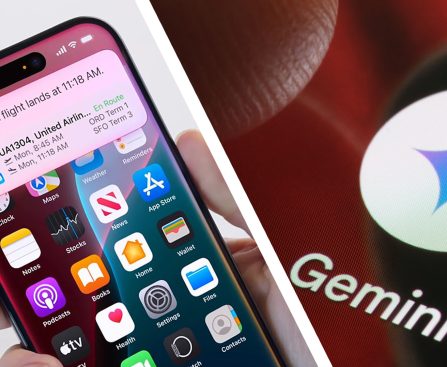
The much-anticipated rollout of the new AI-enhanced Siri appears significantly nearer due to Apple’s collaboration with Google. The company has validated claims that numerous Siri functionalities will be driven by Google’s Gemini models.
We were already aware of some expected capabilities from AI Siri through announcements at WWDC 2024 and a now-removed iPhone 16 advertisement – and the introduction of Gemini Personal Intelligence has now effectively delivered a functional preview.
### Extracting Personal Data from Your Applications
Google has recently unveiled a beta version of what it refers to as Personal Intelligence. The key feature here is Gemini’s capability to utilize a sophisticated blend of sources to formulate responses, comprising personalized data extracted from various Google applications and services that users frequently employ.
Personal Intelligence is capable of fetching particular details from texts, images, or videos within your Google applications to tailor Gemini’s replies. This encompasses Google Workspace (Gmail, Calendar, Drive, etc.), Google Photos, your YouTube viewing history, and an array of Google search functionalities you’ve utilized (Search, Shopping, News, Maps, Google Flights, and Hotels).
The Apple variant will undoubtedly gather data from Apple applications such as Mail, Calendar, Photos, and Notes.
Josh Woodward, head of Google’s Gemini, shared an example of how Personal Intelligence had assisted him. He required new tires for his 2019 Honda minivan and, while queuing at the shop, realized he was unaware of the tire specifications. He consulted Gemini, which not only located the specifications but also proposed alternatives based on his family’s road trips documented in Google Photos, retrieving ratings and prices for each. Furthermore, when he needed his license plate number, Gemini sourced it from a photograph in Photos and aided in identifying the van’s specific trim by searching Gmail.
### Tackling the Hallucination Issue
Hallucinations represent one of the significant risks associated with AI systems, and the dangers heighten if they attempt to deduce from personal data. Google indicates that the new feature permits users to view exactly what inferences it is making and provides the opportunity to validate or amend them.
Users will not need to guess the origin of an answer; Gemini will cite or clarify the information utilized from linked sources for corroboration. If a response seems inaccurate, users can rectify it immediately, such as specifying preferences like “I prefer window seats.”
### Safeguarding Privacy
Google highlights that users must consent to Personal Intelligence and choose which applications to incorporate. Connecting applications is disabled by default, enabling users to activate it, select particular apps, and deactivate it at any time. Additionally, the company assures that user data remains within the Google ecosystem, which may offer some peace of mind, although the Apple variant will only access information within Apple applications and iCloud accounts.
### Video Overview
Our sister site 9to5Google features an 8-minute video that showcases all of the new functionalities.
What do you think? For our purposes, assume everything operated by Google is instead managed by Apple, as that will be the reality for the Gemini-driven Siri. It will utilize your Apple applications, access your iCloud data, and operate either on-device or through Apple’s Private Cloud Compute servers.
LG Introduces New Robot to Help with Everyday Tasks, Such as Folding Laundry
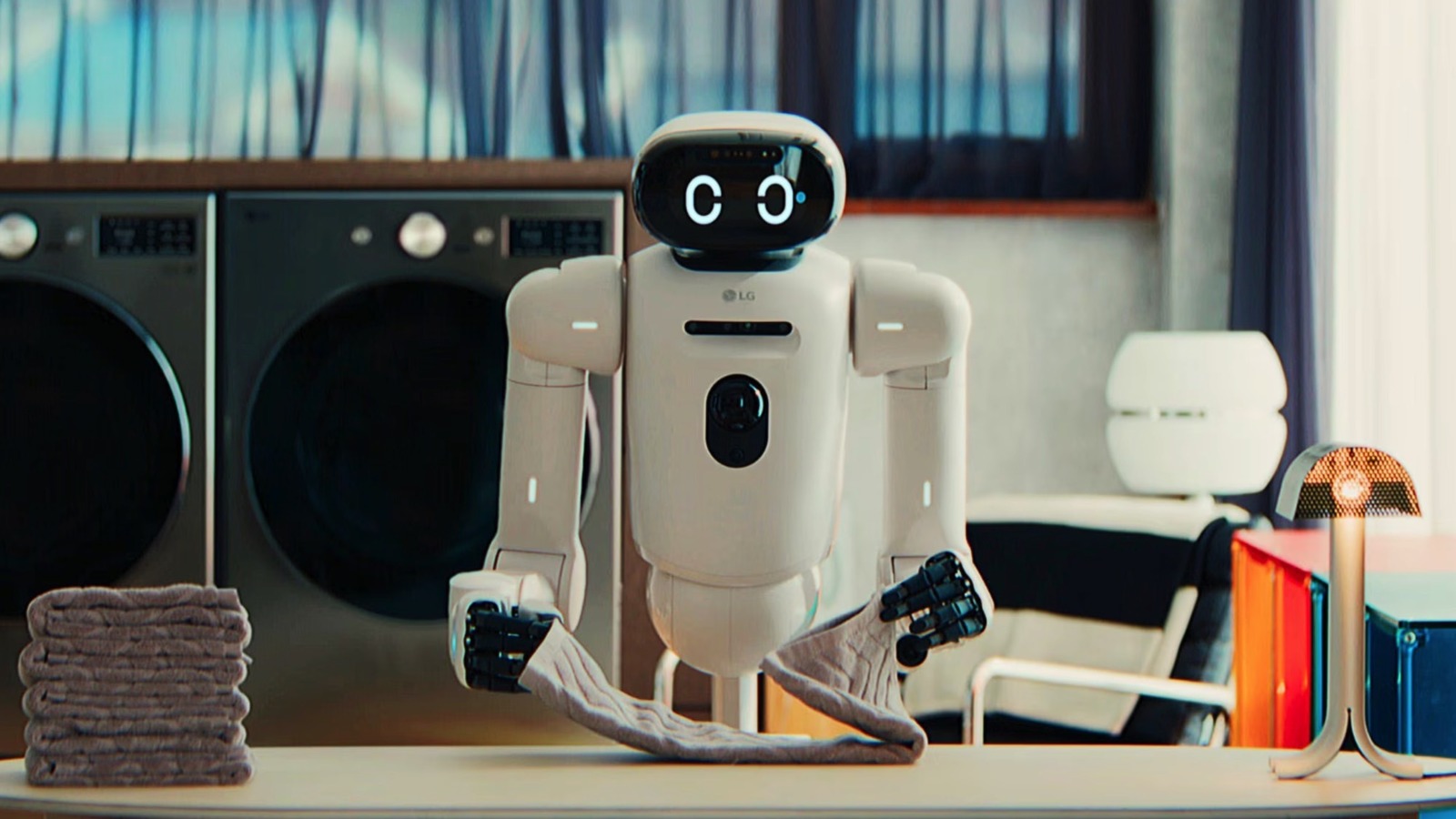
LG’s latest robot, CLOiD, does much more than simply fold laundry. It is capable of communicating with various home appliances, particularly those manufactured by LG, and can take on additional household tasks — such as loading the washing machine, washing dishes, and preparing meals.
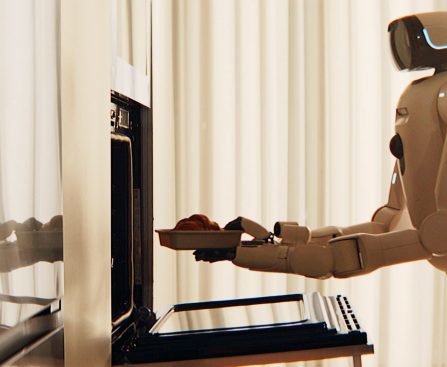
Introduced at CES 2026, LG CLOiD is a part of the company’s “Zero Labor Home” initiative, which aims to have smart machines and robots take on the routine household tasks that humans perform. The forthcoming robot won’t just fold clothes at home after it becomes available for purchase. It will also have the capability to load the washing machine, showcased in a demonstration by LG at CES. Moreover, LG revealed a new two-in-one washer/dryer appliance that can complete the laundry cycle while users are away. CLOiD will then be responsible for folding the laundry and managing other features of the smart home. A video presented by LG displayed the robot working in tandem with the air conditioning unit and lighting system to regulate the home’s temperature and illumination. Additionally, the robot can connect with a smart refrigerator to check available ingredients and heat meals using a smart oven.
Regrettably, LG has not provided any information regarding the availability of CLOiD. While the new robot might captivate consumers, no release date or pricing information has been disclosed to date.
How LG CLOiD folds laundry
[embedded content]
The new robot isn’t precisely humanoid, as it doesn’t possess human-like legs. It comes equipped with a head, torso, and two hands, each featuring five fingers. The head houses the robot’s brain, which includes a computer (executing AI processes), a display for facial expressions, a speaker for verbal interaction with humans, along with cameras and sensors that help the robot perceive its environment. In order to perform household chores, CLOiD operates through a sophisticated AI system that integrates a Vision Language Model (VLM) and a Vision Language Action (VLA). VLM is a technology enabling the AI to interpret images and videos. The VLA serves to convert visual and verbal signals into physical actions.
CLOiD’s torso is capable of tilting to modify its height, enabling it to retrieve items from ground level. Each arm is designed with seven degrees of freedom, and LG claims this feature emulates human mobility. “The shoulder, elbow, and wrist allow forward, backward, rotational, and lateral movements, while each hand includes five independently actuated fingers for precise manipulation,” <a href="https://www.lg.com/global/newsroom/news/home-appliance-and-air-solution/lg-electronics-presents-lg-cloid-home-robot-to-demonstrate-zero-labor-home-at-ces-2026/" target="_
Idris Elba’s Apple TV suspense series has been renewed for a second season.
Idris Elba is back for Season 2 of “Hijack” on Apple TV, reprising his character Sam Nelson, an expert in corporate negotiations. Directed by Jim Field Smith, the new season is set two years after the conclusion of Season 1. This time, Nelson finds himself on a packed underground train in Berlin that has been seized. As he navigates the high-pressure scenario on the train, law enforcement works to handle the crisis from above ground. Joining Elba are returning cast members Christine Adams, Archie Panjabi, and Max Beesley, along with new additions Clare-Hope Ashitey, Lisa Vicari, and Toby Jones. The premiere episode is now available for streaming, with new episodes debuting every Wednesday until March 4, 2026, for this eight-episode season. Despite receiving mixed audience feedback, the show has garnered critical praise, with Sherin Nicole from RogerEbert.com describing it as “an intensely watchable series that keeps your attention and anxiety up.” Fans can also binge the first season on Apple TV.

Presenting ChatGPT Translate: OpenAI’s Latest Tool Rivals Google Translate
ChatGPT Translate Debuts with Support for Over 50 Languages and Allows Users to Customize Tone and Context via One-Tap Prompts
OpenAI has introduced ChatGPT Translate, a fresh web-based translation solution presented as a direct rival to Google Translate. ChatGPT Translate accommodates more than 50 languages, providing real-time translations alongside automatic language identification. The tool distinguishes itself by featuring AI prompts that modify the tone, fluency, and complexity of the translated content.
A new contender has emerged against Google Translate, thanks to OpenAI, in the shape of ChatGPT Translate. Long regarded as the standard tool for swift translations, Google Translate now faces a competitor dedicated to elevating translation standards. OpenAI, the organization behind ChatGPT, has unveiled a specific website named ChatGPT Translate, placing it in head-to-head competition with Google’s translation service.
Upon its launch, the service enables support for over 50 languages and is designed similarly to familiar online translation platforms. Users are presented with two text boxes: one for the source text and another for the translated result, in addition to drop-down menus for choosing the source and target languages. Like Google Translate, ChatGPT Translate includes automatic language identification.
OpenAI quietly rolls out a new competitor to Google Translate
Users can start entering text straightaway, with translations populating live as they type. What differentiates ChatGPT Translate are the quick prompts located beneath the text boxes. These prompts allow users to enhance translations to appear more fluent, business formal, child-friendly, or suited for an academic audience. Selecting any of these prompts initiates the request directly in ChatGPT, with the original text and the modification instructions already incorporated.
The website also indicates capabilities for translating images and files, although these features are currently unavailable. In contrast to Google Translate, ChatGPT Translate does not yet offer voice input (on desktop) or options for complete website translation. While ChatGPT could previously function as a translation tool, this new site provides users with a unified, dedicated place for quick translations.
At this moment, there is no indication of a separate ChatGPT Translate application or a specific section within the ChatGPT app, and OpenAI has not yet released an official statement regarding the tool.

Spotify Increases US Subscription Costs by 8%, Eliciting Mixed Responses from Users
**Spotify Price Hikes: Essential Information for US Subscribers**
Recently, Spotify, the widely-used music streaming platform, revealed that it will be raising the prices of its premium subscription options in the United States. This move follows a pattern initiated last year, during which the company elevated prices in multiple countries while US rates remained steady. However, that phase of price stability for American users is now concluding.
### International Price Changes
In late 2022, Spotify enacted price increases in different markets throughout South Asia, the Middle East, Africa, Europe, Latin America, and the Asia-Pacific region. For example, in the UK, the cost of an individual premium subscription increased from £11.99 to £12.99, while the family plan went up from £19.99 to £21.99. These modifications were part of Spotify’s plan to improve its services and retain a competitive position in the streaming industry.
### Updated Pricing for US Subscribers
Starting in February, US premium subscribers will notice an increase in their monthly subscription fee from $11.99 to $12.99. Spotify has communicated this change via emails sent to impacted users, expressing gratitude for their loyalty and clarifying that the price modification is vital for continuing to provide a high-quality experience. The email also contains a link to a comprehensive list of premium features and benefits associated with the subscription.
### Investor Response
Although the news of price increases may not be favored by customers, it has been positively received by investors. Following the announcement, Spotify’s stock saw a 3% rise in premarket trading, suggesting that the market perceives the price changes as a beneficial step for the company’s financial stability.
### Final Thoughts
As Spotify revises its pricing model in the US, subscribers will need to assess the advantages of the premium service in light of the new prices. While the increase might be disheartening for many users, the company’s dedication to enhancing its offerings and sustaining investor trust indicates a focus on long-term growth and service enhancement.
Setapp Mobile’s Third-Party App Store for iPhone Encounters Difficulties, Blames Apple for Problems
**Setapp Mobile to Discontinue in Light of Apple’s Antitrust Adjustments**
The antitrust regulations set forth by the European Union have had a profound effect on the app marketplace, especially for Apple users. One prominent change required Apple to allow third-party app stores on iPhones in the EU. MacPaw’s Setapp Mobile was quick to take advantage of this new opening. Nevertheless, the company has now revealed its plans to shut down its iOS store, attributing this decision primarily to Apple’s rigid business conditions.
Setapp Mobile’s homepage now redirects visitors to an announcement on its support site, indicating that the service is set to end on **February 16, 2026**. The company noted that the shifting and complicated nature of Apple’s business policies does not fit with Setapp’s current operational model, leading to this tough decision.
The termination of Setapp Mobile may require subscribers to move to separate subscriptions for the various applications they have been using through the service. This transition could result in increased expenses for users who previously accessed over 50 paid iPhone apps with one monthly subscription, free from in-app purchases and ads.
Setapp Mobile first emerged as a limited beta in the spring of 2024, followed by a complete public release in September of that year. Despite this challenge for its mobile platform, it’s worth noting that Setapp for Mac remains unaffected by these changes, continuing to offer users a range of applications.
As the app distribution landscape evolves, the consequences of such shifts will be closely observed by both consumers and developers.

Android 16 QPR3 Beta 2 Improves Settings Navigation and Resolves Multiple Bugs
The newest release of Android 16 QPR3 Beta 2 introduces notable enhancements to the System Settings interface, making navigation more user-friendly. This update categorizes related system settings under more defined sub-headings, improving user experience with a clearer and more intuitive layout. Previously, the System Settings displayed a lengthy list of options with minimal visual distinction, which could be daunting for users searching for specific settings.
With the latest update, settings are organized into clear sections, such as “Interaction” for keyboard, gestures, and navigation mode, and “Update device” for system updates. This reorganization enables users to swiftly locate and access the settings they require without scrolling through a lengthy list. The enhanced layout also works well with the existing search feature, facilitating easier discovery of specific settings.
This update is part of a larger initiative by Google to improve the stability and functionality of its operating system. In addition to the revamped System Settings, Android 16 QPR3 Beta 2 includes a thorough list of bug fixes and stability enhancements for Pixel devices. These fixes tackle issues such as severe system crashes, notification shade problems, charging limit concerns, and sluggish Wi-Fi connectivity.
In summary, the update seeks to deliver a smoother and more user-centric experience for Android users, especially those with Pixel devices. The alterations to the System Settings interface are a valuable enhancement, simplifying the process for users to personalize their devices and effectively manage system settings.

Apple to Invest Billions in Gemini; OpenAI Decides Against Pursuing Siri Collaboration – Financial Times
**Apple’s Collaboration with Google: Gemini Enhancing Siri**
A recent report has validated Apple’s alliance with Google to employ the Gemini AI models for augmenting Siri, the voice assistant on Apple devices. This collaboration has ignited discussions surrounding the financial repercussions, with estimates indicating that Apple could be allocating roughly one billion dollars per year for this arrangement.
**Google’s Gemini Models Enhancing the New Siri**
Apple officially disclosed that Google’s Gemini AI models will be incorporated into the upgraded Siri, a decision perceived as advantageous for both investors and consumers. Google has suggested that this arrangement is a multi-year contract, and Apple will deploy the Gemini models on its own Private Cloud Compute servers to safeguard user privacy.
The conjecture regarding the financial components of this agreement hints that Apple might be expending about $1 billion annually, a figure corroborated by recent reports.
**Apple Expected to Invest Billions**
As per a report from the *Financial Times*, the partnership is framed as a cloud computing agreement, which might lead to Apple paying several billion dollars to Google throughout the contract’s duration. While the nuances remain somewhat unclear, the concept of multi-billion dollar transactions over several years aligns with the projected annual investment of $1 billion. This expenditure seems to be a strategic initiative for Apple, particularly given that it gains significantly more from Google in other business arrangements.
**OpenAI Allegedly Opted Against Apple Partnership**
Notably, the report also points out that OpenAI, the entity behind ChatGPT, opted not to seek a partnership with Apple. Sources suggest that OpenAI made a conscious choice to abstain from becoming the custom model provider for Apple, choosing instead to concentrate on creating its own AI device. Although it is probable that discussions occurred between Apple and OpenAI, it remains unclear whether a formal proposal was ever presented.
The AI device referenced in the report is rumored to involve a project with former Apple design chief Jony Ive, although specific details about this hardware are still largely unconfirmed.
In conclusion, Apple’s collaboration with Google to integrate Gemini into Siri signifies a major advancement in AI technology for the corporation, with considerable financial obligations and strategic ramifications for the future of voice assistance on Apple devices.

Wikipedia Marks 25th Anniversary in the Face of Growing Challenges
### Wikipedia Celebrates 25 Years: An Acknowledgment and a Call for Engagement
Wikipedia, the largest global online encyclopedia, is marking its 25th anniversary today. Since its launch on January 15, 2001, with merely four pages, it has expanded to include over 65 million articles across more than 300 languages, attracting billions of views monthly. The Wikimedia Foundation recognizes this significant milestone with a special microsite that showcases Wikipedia’s evolution and influence.
#### The Development of Wikipedia
From the beginning, Wikipedia has sought to deliver free and accessible knowledge to all. Approximately 250,000 volunteers aid in maintaining the platform, ensuring that the content remains accurate, impartial, and trustworthy. This collective initiative has established Wikipedia as a vital resource in many domains, such as education, journalism, and artificial intelligence.
In honor of its 25 years, Wikipedia presents a variety of events, featuring a historical summary of its growth, future-oriented quizzes, and merchandise for supporters.
#### Challenges Confronting Wikipedia
In spite of its successes, Wikipedia encounters considerable challenges that jeopardize its future. Reports suggest that the platform is facing pressures from multiple sources. Certain political factions claim Wikipedia exhibits bias, particularly from conservative quarters, with groups like the Heritage Foundation vowing to focus on its volunteer editors.
Furthermore, the surge in artificial intelligence has resulted in bots harvesting Wikipedia’s material, creating additional strain on its servers. Adding to these problems is the decline in volunteer engagement, often referred to as the “graying of Wikipedia,” raising doubts about the sustainability of its model.
#### The Existential Challenge
Arguably, the most urgent issue is the cultural shift away from the foundational principles of Wikipedia. The values of neutrality, source assessment, and public service appear increasingly irrelevant in a digital arena marked by partisanship and commercial priorities. This transformation prompts questions regarding Wikipedia’s future and its ability to adapt to an evolving landscape.
As Wikipedia commemorates its 25th anniversary, it highlights the significance of shared knowledge and the necessity for active involvement to ensure its continuation. The future of this essential resource ultimately depends on its users and advocates.